SEO & AI Visibility Analytics
Search engines and AI systems now compete for your audience's attention. Waftr connects Search Console query data, GA4 behavior metrics, and structured data implementation to recover lost organic traffic and build AI citation readiness across your entire content library.
Start Your SEO Analysis
For growing businesses · 10-day turnaround
🔒 Your analytics data is confidential.
What Is SEO and AI Visibility?
SEO and AI visibility is the practice of making your content discoverable in both traditional search results and AI-generated answers. It combines technical search optimization, structured data markup, and content formatting that search crawlers and language models can extract, rank, and cite.
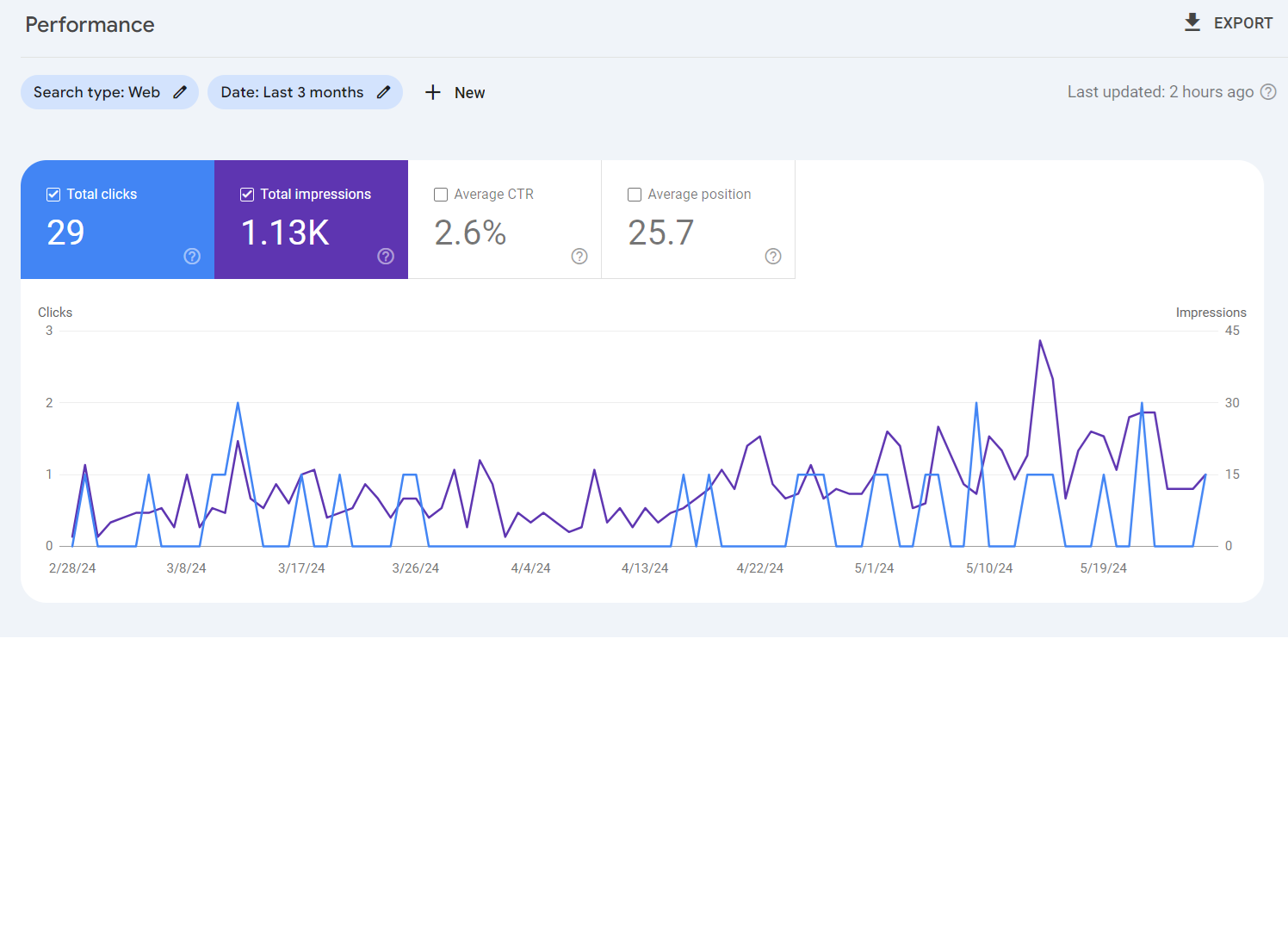
Who Needs SEO and AI Visibility Optimization
If any of these describe your situation, SEO and AI visibility consulting will save you months of trial and error.
Companies losing traffic after Google updates
Core algorithm updates penalize sites with thin content, poor Core Web Vitals, or missing structured data. Recovery requires technical diagnosis and systematic optimization.
Businesses with no schema markup
Without structured data, your pages cannot appear as rich results in search and are invisible to AI extraction algorithms that power answer engines.
Marketing teams unable to connect SEO to revenue
Search Console shows impressions and clicks. GA4 shows conversions. Without integration, your team cannot identify which keywords drive revenue or where organic leads drop off.
Organizations invisible to AI answer engines
ChatGPT, Perplexity, and Google AI Overviews extract answers from pages with clear semantic structure. Content without schema and answer-first formatting gets zero AI citations.
E-commerce brands with poor product visibility
Product schema, review markup, and category page optimization drive shopping carousel placement, rich snippets, and AI product recommendations in generative search.
Enterprises with Core Web Vitals failures
LCP above 2.5s, CLS above 0.1, or INP above 200ms trigger Google's page experience demotion. Technical optimization restores ranking eligibility across your entire domain.
The Cost of Not Having Proper SEO
Improper SEO does not just mean lower rankings. It means lost revenue, wasted content investment, and increasing invisibility across both search and AI channels.
Hidden text, cloaking, and keyword stuffing may produce short-term ranking gains, but Google's SpamBrain algorithm detects these patterns and issues manual actions that remove pages from search results entirely. Recovery from a manual action takes 3-6 months of remediation work and resubmission. The revenue lost during that window often exceeds the cost of proper SEO from day one.
Publishing high volumes of shallow content consumes Googlebot's crawl budget on low-value pages. This delays indexation of your important pages and signals to Google that your domain produces low-quality content. The Helpful Content System evaluates your entire site, not individual pages. One section of thin content can suppress rankings across your entire domain.
Purchased links, PBN networks, and automated link building create unnatural link velocity patterns that Google's link spam updates detect. Affected pages lose all link equity and drop from rankings. Disavowing toxic backlinks is reactive and unreliable. The only sustainable approach is building topical authority through content that earns genuine editorial links.
Google does not penalize AI content by default, but it does penalize content that adds no original value. Mass-produced AI articles without expert review, original data, or unique perspective trigger the Helpful Content System's site-wide classifier. Once flagged, every page on your domain suffers ranking suppression until the low-value content is removed or substantially improved.
Google releases multiple core updates per year. Each update reassesses content quality, technical health, and user experience signals. Sites without proper schema markup, clean site architecture, fast Core Web Vitals, and mobile optimization lose ground with every update cycle. The compounding effect means that sites falling behind in 2024-2025 face an increasingly difficult recovery path.
What Waftr's SEO and AI Visibility Consulting Covers
We do analytics, not what many agencies miss. Click a service area to see how we approach each dimension of SEO and AI visibility.
We start by understanding your business model before writing a single recommendation.
Every SEO engagement begins with business context. We map your revenue model, audience segments, conversion paths, and competitive landscape before touching any technical configuration. This prevents the common agency pattern of applying generic SEO templates that ignore your specific market dynamics.
Your keyword strategy, content priorities, and schema implementation all flow from this business understanding. A SaaS company optimizing for free trial signups requires fundamentally different SEO architecture than an e-commerce brand optimizing for product page conversions.
Talk to an ExpertProper keyword research maps search intent to conversion potential, not just volume.
We analyze keyword clusters by search intent (informational, navigational, commercial, transactional) and map each cluster to a stage in your conversion funnel. High-volume keywords that attract non-converting traffic waste content investment. We prioritize keywords by their revenue potential, not just monthly search volume.
Keyword research also identifies AEO opportunities: question-based queries that AI systems answer directly. These represent a growing share of search traffic and require specific content formatting to capture AI citations alongside traditional rankings.
Talk to an ExpertComplete technical analysis covering crawlability, indexation, and site architecture.
We audit your entire site for crawlability barriers, indexation issues, redirect chains, XML sitemap errors, robots.txt misconfigurations, and mobile usability problems. Every issue is mapped to its ranking impact and prioritized by revenue potential.
Technical SEO is the foundation. Without clean crawlability and proper indexation, content quality and schema markup cannot overcome structural barriers keeping your pages invisible to search engines and AI crawlers.
Talk to an ExpertStrategic schema implementation for rich results and AI extraction.
We implement Organization, Article, Product, FAQ, HowTo, Event, LocalBusiness, and BreadcrumbList schema tailored to your content types. Each schema type is validated in Google's Rich Results Test and monitored for rich result impressions in Search Console.
Schema markup is the bridge between search engines and AI systems. Without it, your content is plain text to both. With it, you unlock rich snippets, featured results, and AI extraction for citation by ChatGPT, Perplexity, and Google AI Overviews.
Talk to an ExpertLCP, CLS, and INP optimization to restore ranking eligibility.
We diagnose and fix Largest Contentful Paint (LCP), Cumulative Layout Shift (CLS), and Interaction to Next Paint (INP) issues at the server, asset, and code level. Each metric has a specific threshold: LCP under 2.5s, CLS under 0.1, INP under 200ms.
Google uses Core Web Vitals as a ranking signal. Pages failing these thresholds are demoted regardless of content quality. Optimization directly impacts both search rankings and user experience, reducing bounce rates and improving conversion rates simultaneously.
Talk to an ExpertContent restructuring for AI extraction and citation readiness.
We optimize content for extraction by ChatGPT, Perplexity, Google AI Overviews, and other generative systems. This includes answer-first formatting, semantic HTML structure, structured data alignment, entity optimization, and LLM citation readiness.
AI citations are becoming a measurable traffic channel. Answer Engine Optimization ensures your content is discoverable, extractable, and citable by language models. Generative Engine Optimization extends this to inclusion in AI-generated search results and overviews.
Talk to an ExpertGA4 + Search Console + BigQuery pipeline for SEO performance data.
We build a unified analytics dashboard connecting GA4 behavior metrics with Search Console keyword data through BigQuery. This reveals which keywords drive revenue, where organic leads drop off, and which content investments produce the highest return.
Executives see organic revenue impact. Marketing sees keyword performance and content ROI. SEO teams see technical health metrics and ranking trends. Each stakeholder gets the data they need to make informed decisions without switching between platforms.
Talk to an ExpertServer log analysis revealing how search and AI crawlers interact with your site.
We analyze server access logs to show exactly how Googlebot, Bingbot, and AI crawlers (GPTBot, ClaudeBot, PerplexityBot) crawl your site. This reveals which pages are crawled most frequently, which are ignored, and what errors crawlers encounter that are invisible in Search Console.
Server log data is essential for diagnosing crawl budget waste on low-value pages, identifying orphan pages that receive no crawler visits, and understanding how AI bots index your content for training data and citation. Tools like Botify and Screaming Frog process these logs at scale.
Talk to an ExpertNot Sure Where to Start?
Whether you need a full technical SEO overhaul or targeted AI visibility optimization, our certified consultants can help. Talk to an expert to figure out the right path for your business.
Talk to an ExpertSEO vs AEO vs GEO: Understanding the Difference
| Dimension | SEO | AEO | GEO |
|---|---|---|---|
| Goal | Search engine rankings | AI answer citations | Generative search inclusion |
| Target | Search crawlers (Googlebot) | LLM extraction (ChatGPT, Perplexity) | AI Overviews, SGE |
| Key signals | Backlinks, keywords, page speed | Structured data, semantic HTML, answer blocks | Entity authority, freshness, source quality |
| Measurement | Search Console, GA4 | Citation monitoring, referral traffic | AI Overview impressions, brand mentions |
| Waftr approach | Technical SEO + analytics integration | Schema + content restructuring | Entity optimization + monitoring |
All three work simultaneously. Traditional SEO drives search awareness. AEO drives AI citations and answer extraction. GEO drives inclusion in AI-generated search results. The analytics infrastructure connecting all three is what separates effective optimization from guesswork.
How Waftr Tracks Keywords, Rankings, and AI Citations
We connect multiple data sources into a unified view of your search and AI visibility performance.
Google Search Console
Keyword positions, impressions, click-through rates, and indexation status directly from Google's own reporting. The primary source for organic search performance data.
GA4 Integration
Organic session behavior, conversion tracking, and revenue attribution connected to Search Console query data through BigQuery for complete keyword-to-revenue mapping.
Semrush
Competitive keyword analysis, backlink gap identification, content gap opportunities, and domain authority tracking against your direct competitors.
Bing Webmaster Tools
Bing search rankings, AI citation data from Copilot, and crawl diagnostics for the second-largest search engine that also powers many AI answer systems.
Botify
Enterprise-grade crawl analysis, server log processing, and indexation diagnostics for large sites with millions of pages and complex architectures.
AI Citation Monitoring
Tracking brand mentions and content citations across ChatGPT, Perplexity, Google AI Overviews, and other generative platforms through API monitoring and manual audits.
Build search visibility that scales with AI.
Talk to an ExpertHow SEO and AI Visibility Optimization Works
Every SEO and AI visibility engagement follows four stages. We start by auditing your technical foundation, Search Console data, and schema coverage. Then we implement fixes: schema deployment, Core Web Vitals optimization, robots.txt configuration, and content restructuring. Next, we optimize specifically for AI extraction and citation readiness. After launch, quarterly monitoring tracks rankings, rich result impressions, AI citations, and organic conversion metrics so your visibility stays competitive as search and AI systems evolve.
What Changes After SEO and AI Visibility Optimization
The outcome depends on where you start. Here is what each engagement type delivers.
Building search and AI visibility from the ground up
- Technical SEO audit completed with prioritized fix roadmap
- Schema markup deployed across all key content types with rich result monitoring
- Core Web Vitals optimized to pass Google's page experience thresholds
- Content restructured for AI citation readiness across answer engines
- Search Console integrated with GA4 through BigQuery for revenue mapping
- AI citation monitoring active across ChatGPT, Perplexity, and AI Overviews
- Quarterly performance reports with before-after benchmarks
Diagnosing and repairing broken search visibility
- Google penalty recovery plan with manual action remediation steps
- Toxic backlink identification and disavow file submission
- Thin content audit with removal or improvement recommendations
- Schema errors fixed and validated in Google Rich Results Test
- Core Web Vitals bottlenecks identified and resolved at server and code level
- Crawl budget waste eliminated through server log analysis and sitemap cleanup
- Categorized findings report delivered, similar to an SEO audit
Both paths lead to the same destination: measurable search visibility and AI citation readiness that your team can track and optimize over time. Marketing understands which keywords drive revenue. Content teams know which topics attract AI citations. Leadership sees organic channel ROI in quarterly reports. The difference is whether you are building from scratch or repairing what already exists. We handle both.
SEO and AI Visibility Analytics FAQ
Build Search Confidence
Start Your SEO and AI Visibility Engagement
From technical discovery through ongoing performance monitoring, every engagement ensures your content is visible, extractable, and citable across every search and AI channel.
Talk to an Expert